• About

Dave Creech

~ Life on the Green Side

Dave Creech

Category Archives: Uncategorized

Lagerstroemia fauriei ‘Bayou View’ – Is This The National Champ or Not?

05 Thursday Jan 2017

Posted by creechdavid in Uncategorized

≈ 1 Comment

Prior to the 1950s, the only crape myrtles grown in the USA were primarily Lagerstroemia indica.  Crape myrtles are in the genus Lagerstroemia in the Lythraceae.  While there are over fifty species in the genus, two species make up most of our flowering varieties.  The second species made a very late entry into the USA.  In the 1950’s, John Creech of the US National Arboretum made his way to Japan looking for new and interesting plants.  He sent back seed in 1956 from the Japanese crepe myrtle, Lagerstroemia fauriei, a species that had never been grown in the USA before.  Five of these seedlings were planted at North Carolina State University on a spot that later became the JC Raulston Arboretum.  They are magnificent.    One of those seedlings exhibited an attractive upright form with interesting exfoliating bark and it was later named ‘Fantasy’.  Another tree there was named ‘Townhouse’.  They remain in the trade to this day.

lagerstroemia-faurei-ncsu-snow

The two old Lagerstroemia faureis in the JCR Arboretum, winter 2004

While these two trees have received fame and fortune and photographs have appeared in national magazines, there’s one other one that deserves attention.  It’s planted at Akins Nursery along a bayou in Shreveport, Louisiana.  The nursery began there in 1943 and the exact date of the L. faurei planted there goes back to the early 1950s and a  seedling that Frank Akin or Sherwood Akin planted.  Exactly which brother planted the tree is  still conjecture – and exactly how they got the seedling is another question lost in time and space.  I knew Sherwood well.  He had a nursery near Shreveport in a town called Sibley, Louisiana.  He was certainly the plantsman and, yes, he communicated with folks all over the USA.  Every day Sherwood was on a mission to find a new plant for culture.  I  remember him saying he got the plant from the National Arboretum.  I don’t know if it was a seed or a seedling.  It doesn’t really matter.  Akins nursery still exists there on King’s Highway and the tree can be seen from afar.  Foster Cook and Donna Timms Oakes bought the nursery from Frank in 1990 and carried the mission forward until the newest owners, Brian and Jennifer McGimsey, bought the nursery from them about four or five years ago.  When I first met Foster I suggested we propagate the plant and distribute it –  and he said sure.  I asked if he would give it a name.  He thought about it a bit and came up with a really nice name, ‘Bayou View’.  Perfect.  How big is the tree?  Well, the circumference tapes over 118″ at breast height (Nov 25, 2023) and I’m unsure of the height.  It’s up there.   Is it the National Champ?  My Eastern brethren rarely mention the tree – gravitating to praise the lofty fellows at the USNA and at the JCR Arboretum.  ‘Bayou’ View doesn’t mind being ignored.  With it’s feet in the bayou, I’m sure it’s still growing.

lagerstroemia-aikin-4-09-12-07

Imposing

lagerstroemia-aikin-2-09-12-07

An Aristocrat in the Crape World

Over the years, I’ve visited the tree many times.  I’ve taken friends like Richard Olsen, the current Director of the US National Arboretum, and Todd Lasseigne, Director of the Tulsa Botanical Gardens to the tree.  They come away amazed.  It helps that my wife lives in Shreveport, Louisiana – and I spend plenty of time there.

lagerstroemia-akins-nursery-2-sm

Foster Cook is the owner of Akin’s Nursery, Shreveport, Louisiana

lagerstroemia-bayou-view-todd

Todd Lasseigne in 2004 by ‘Bayou View’

lagerstroemia-with-richard-olsen

Richard Olsen, Director of the US National Arboretum in 2009

Crape myrtles typify the Deep South.  Native to Southeast Asia, crape myrtles were introduced to the United States more than 200 years ago. Records from Mount Vernon indicate in 1779 that seeds of crape myrtles made their way to the George Washington plantation. Many 100-year-old and older specimens still dot historic landscapes and abandoned properties from the Atlantic Ocean to Texas.  Lagerstroemia faurei is different.  It’s been an immigrant in the USA for about 60 years.  What these remarkable trees will look like in the future is difficult to say but in China we know of trees making their mark into the hundreds of years.

lagerstroemia-aikin-1-09-12-07

Come sit a spell

There’s one other rarely encountered L. faurei worth mentioning.  I first admired this plant near Woodlander’s, Aiken, SC.  It was in the nearby landscape of George Mitchell who worked at the nursery.  George was a native of Grenada and an enthusiastic plantsman and he let me take a few cuttings.  I brought them back to Texas, took some cuttings and scattered a few plants here and there as ‘Woodlanders Chocolate’, named for its very dark bark.  It was reported to me as a seedling of L. faurei and the flowers suggest that. Our original tree is quite impressive and I’ve long admired the  dark bark.

lagerstroemia-woodlanders-chocolate-1-6-27-05

‘Woodlanders Chocolate’ was found in the landscape of George Mitchell, Aiken, SC

Ulmus parvifolia ‘Blizzard’

05 Thursday Jan 2017

Posted by creechdavid in Uncategorized

≈ 3 Comments

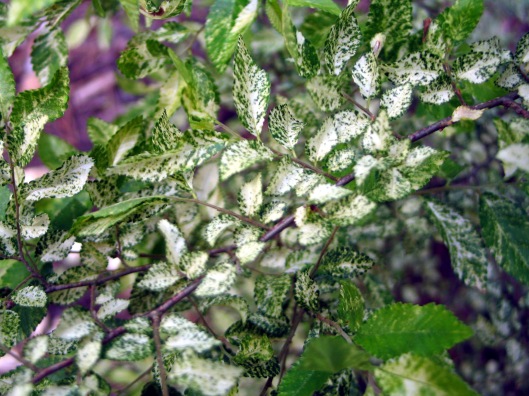
‘Blizzard’ is a rarely encountered chance sport mutation of Chinese lacebark elm.  Chinese lacebark elm is a strong nursery and landscape participant in the southern USA tree industry.  While many sold are seedlings, there are many superior varieties and ‘Blizzard’ is unique in several respects.  First, it’s going to be slower-growing smaller version of the lacebark elm.  Second, it’s decidedly variegated, and appears not to revert, at least for us.  The unique paint-flecked variegation is guaranteed to lighten up any part shade garden and for us in the Pineywoods, it’s best in almost full sun.  Yes, it’s a bit slow, but not ridiculously so.  From a distance, the variegation is blended to create a lime-green glow.  Up close, the variegation is cheerful, clean and crisp. 

ulmus-parvifolia-blizzard-5-03-05

Now there is a bit of controversy on the original source.  If you google the plant, the first thing that comes up is a Wikipedia: “The Chinese Elm cultivar Ulmus parvifolia ‘Blizzard’ arose in 2001 from a sport mutation on a tree growing in the Louisville Gardens, Kentucky. It was cloned at the Mast Arboretum of the Stephen F. Austin State University, Nacogdoches, Texas.”  I’m not sure this is totally correct.  It’s partially correct, however.  The clone in the SFA Mast Arboretum is via Mike Hayman, Louisville, Kentucky.  In September, 2001, I was in Louisville making a presentation to the Kentucky Nursery and Landscape Association and Mike took a day to squire me around some of the great Louisville gardens.  His personal garden was one of those special places brimming over with all kinds of interesting plants – a cornucopia of diversity.  Mike allowed me to take a few cuttings of the little variegated lacebark back to Texas.  I can’t remember exactly, but I think Mike had acquired the genotype via seed from a University of Nebraska expedition to China.  One came up variegated.  At SFA, we were able to multiply the clone via cutting propagation, and, to be honest, and as we’re prone to do, we scattered it far and wide.  Several years after the plants were well established in our garden, I learned from friends in Kentucky that the clone had been given the name ‘Blizzard’.  This is a great name and it fully describes the flecks of light green and cream spots splashed on the foliage.  Years later, I learned that Tony Avent of Plants Delight in North Carolina ( http://www.plantdelights.com/ ) offered a clone ‘variegata’, described in one of those rave reviews that only Tony can conjure up.  In an email, Tony said he got the plant via Glasshouse Works in Ohio and he remarked that the clone he had had been floating around there since the early 1970s.  Unfortunately, this clone fails to root and Tony won’t graft, so he sows seedlings and picks the variegated seedlings.  Wow.  Diversity rules even in the little lacebark tree variegated world.  However, this means that there may be Blizzard-like plants floating here and there that are not actually the true ‘Blizzard’.  That should concern no one.  The fact that the ‘Blizzard’ at SFA Gardens roots at all is encouraging.  Tony’s website image was strikingly similar to the ‘Blizzard’ we know here in our East Texas garden.  In our environment, the variegation has been stable and we’ve yet to see a reversion – but that might not be the case in other areas – and it may break green tomorrow. 

Propagation has been easy via late spring and summer cuttings placed under mist, with or without hormones. Because the variety is prone to thin branches, finding suitable cutting wood is often a bit tricky.  The thicker young wood from vigorous shoots roots easier than the thin twiggy branches.  We generally apply a 2500 to 5000 PPM K-IBA rooting hormone as a five-second dip.  In our work, roots appear in three to four weeks.  While our rooting percentages have been lower than desired (25 to 50%), I’m convinced that careful selection of the right kind of cuttings would increase that number.  After rooting, ‘Blizzard’ has been a slow grower in the container for the first few months, but soon becomes well established and thrifty if the container substrate is well drained and good nutrition is applied.  A saleable one gallon container can be developed in one year.  A well-drained container substrate is essential to good growth; soupy wet mixes can kill plants quickly.

ulmus-parvifolia-blizzard-06-11-08

Because the clone is relatively new to the garden world, I’m not sure just what the ultimate height might be.  Our oldest plant is a specimen about 15′ tall and 10′ wide in a part-shade location of the Arboretum.  ‘Blizzard’ should be planted in a well-drained garden location and appreciates mulch.  In our area, the plant performs well in part shade – or at least protected from the harsh western sun in summer.  We have had a few container plants burn in full sun in the nursery but this might have been moisture related.  In more northern climes, the variety does quite well in full sun if attention is paid to soil moisture.  The variety should receive timely irrigation during the establishment years.


Ulmus X hollandica ‘Jacqueline Hillier’ – A Dwarf Elm for the Gardener Who Has Everything

05 Thursday Jan 2017

Posted by creechdavid in Uncategorized

≈ 1 Comment

This is a really dwarf elm – basically a densely branched wider than tall toadstool blessed with a blanket of tiny green leaves. Each leaf is typically elm-like, less than an inch long, and arranged in a closely spaced herringbone pattern along the branches.  This unique variety arose as a chance hybrid seedling in a garden in Birmingham, England.  While sometimes encountered as Ulmus elegantissima ‘Jacqueline Hillier’, the Royal Horticultural Society seems convinced that this variety was created by a cross of Ulmus glabra and U. plottii.  ‘Jacqueline Hillier’, whatever the exact name or parentage, deserves much more use in the landscapes of the southern USA.  We have grown the clone for years and have found it to be a conversation piece.

ulmus-x-hollandica-jacqueline-hillier-3-7-09-06

I have encountered ‘Jacqueline Hillier’ as specimens in a number of botanical gardens, arboreta and private gardens in the South, and I’m convinced this is a cute little shrub of considerable merit. There’s a fine older specimen in the Missouri Botanical Garden near the conservatory.  The variety is very hardy, reported to survive -25o F (!), and if kept in a conservatory, “Jacqueline Hillier” remains essentially evergreen.  In the garden, this variety can be left unpruned to become quite large in a decade or two. On the other hand, careful winter and summer pruning can keep the shrub within almost whatever small volume you desire.  Popular in the bonsai crowd, the species can be pot grown quite easily, but again, this is not a plant that one can leave for very long without taking care of watering. In one garden, the proud owner had limbed up the variety to remove the dense branching and expose the bark.  While more elm tree shaped, I didn’t care for the effect. The plants seemed unhappy and I concluded it wants to be a toadstool.  The branching is unique, a herringbone ambience to its form.

ulmus-x-hollandica-jacqueline-hillier-small

‘Jacqueline Hillier’ appreciates a very well-drained soil and (in our area) needs timely irrigations to keep the plant crisp and clean.  Hot dry conditions, particularly for plants sited in full sun, often creates leaf burn.  This clone is not tolerant of wet feet and can succumb to saturated soils – and we have lost the plant in several wet locations over the years.  While the variety can survive such bouts with drought, it’s not the way to grow the plant.  ‘Jacqueline Hillier’ has excellent resistance to Dutch elm disease. Various wilts, rots, cankers and leaf spots are reported but I’m convinced they are primarily drainage related.  Insects reported to visit the plant include aphids, borers, leaf hopper, beetles, mealybugs, caterpillars and scale.  We’ve never seen that as a problem.

We have found ‘Jacqueline Hillier’ very easy to multiply. Small cuttings taken late spring and summer and given mist propagation often root in just a few weeks, with or without hormone.  Despite their dwarf nature, they grow fairly fast when young and a saleable one gallon container plant can be produced in less than one year.  A saleable 3 gallon can be produced at the end of the second year.  ‘Jacqueline Hillier” is rarely available in specimen sizes and I suspect shipping this wide statured plant will always be a problem.  If cinched up tight for shipping, broken and bent branches are the norm.

Awhile back, I was wandering in the garden and I spotted a couple and their kids. From a distance I saw that they had spotted our ‘Jacqueline Hillier’ and watched them wander into the bed to get a closer look.  I was a bit surprised to see the family actually “petting” the plant.  That did it for me.  Any plant that people want to pet has got to be worth a place in the landscape.  It’s pettable.

Halesia diptera – A Native Two- Winged Silverbell with Class

05 Thursday Jan 2017

Posted by creechdavid in Uncategorized

≈ 2 Comments

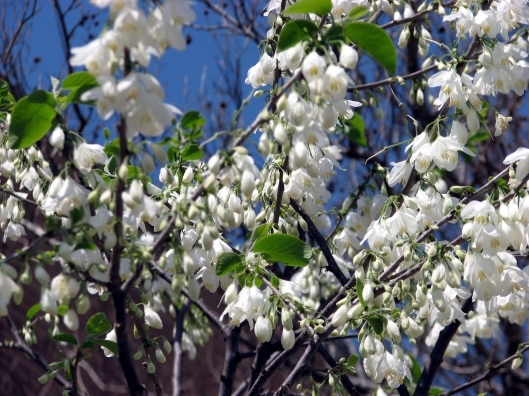
This native silverbell deserves its day in the sun.  I’ve been admiring it for over thirty years here at SFA Gardens and in landscapes across the South.  Showy white 1” bell-faced blooms in May on ¾-inch pedicels are a key feature.  While many believe this is part of the shady under forest of the Pineywoods, this tree is really at its best in sun.  The more sun, the more flowers.  The foliage is attractive, bright green, with alternate leaves and we admit there’s no Fall color to write about.  The tree needs watering when young but a well established tree is quite drought tolerant.  It’s a native.  It reaches 15′ to 30′ at maturity and has an appealing form, often wider than tall.  The tree can be used as part of the mixed border, as a specimen small tree as a standard or multi-trunk, along stream edges, in woodland massing, and as part of wildlife habitat.

halesia-diptera-var-magniflora-03-27-08

Halesia diptera var. magniflora in good sun

Our specimens in the shade garden and here and there in the garden come from Newton county,. Texas, originally, and have developed into robust small trees.  The bloom is the key feature but the bark interest and tree structure would have to be close behind.  The bark is smooth and striated.  I can remember a visit by Don Shadow and others last fall and his favorable impression of a small colony of four or five trees in heavy seed.  The trees have been trained to single trunks and are very vigorous and flower profusely even though they only receive three to four hours of sun. The tree enjoys a refined grace.

halesia-diptera-var-magniflora-03-23-07

Halesia diptera var. magniflora

Native across the South, there is one form being promoted that has yet to make as big a splash as I thought it would.  Halesia diptera var. magniflora is a Florida ecotype with significantly larger blooms.  The two-winged Silverbell is often referred to as the American silverbell, which it really is not.  That title should go to Styrax americanus, which is more diminutive, more bush like and thicket forming.  Two wing silverbell is a tree. Like the American snowbell, think about putting a bench under one, positioned to catch an early morning patch of sun.  The silverbell needs a well-drained soil and a carpet of mulch is the rule.

Propagation is not easy. We have had good success with cuttings provided the wood comes from strong shoots.  Cutting back a small tree hard can produce those.  June cuttings are best.  Seed needs a cold moist stratification; seeds sown in the fall will germinate the following spring.  A spring seedling can reach 2’ in a one gallon the first growing season.

While rarely encountered in the marketplace and never at the mass markets, this is a trouble free tree that deserves a fan club.


Phlox nivalis ssp. texensis – Texas Trailing Phlox

04 Wednesday Jan 2017

Posted by creechdavid in Uncategorized

≈ Leave a comment

Phlox nivalis ssp. texensis, Texas trailing phlox, is a beautiful little plant and one of the rarest globally endangered phloxes.  It’s been listed as endangered globally since 1991. The Texas Parks and Wildlife has a heavy interest in the species and is managing a recovery program.

http://tpwd.texas.gov/huntwild/wild/species/trlphlox/

Listed as occurring in 21 sites n Hardin, Polk, and Tyler counties in East Texas, the species is endangered because of habitat loss due to canopy closure, fire suppression, encroachment by woody vegetation, deer and other herbivores, and land disturbance by man.

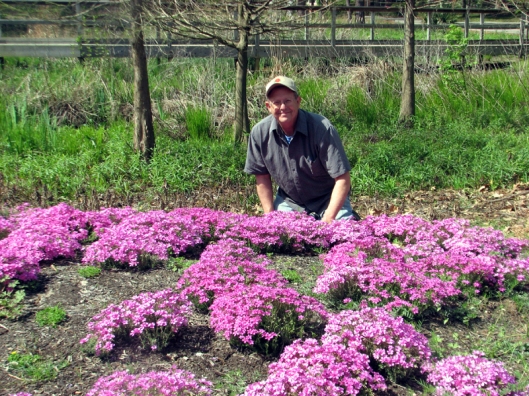
phlox-nivalis-04-02-2010

2010 image of Texas Trailing Phlox plot at SFA Gardens, Nacogdoches, TX


phlox-nivalis-ssp-texensis

Texas trailing phlox in 2010 – this plot no longer exists – but our work will return soon in another spot

The home of Texas trailing phlox is best characterized as open pine woodlands with generally sandy soils and a dry upland vegetational pattern. This attractive evergreen makes a matting clump to a foot or two wide and six to nine inches high. Texas trailing phlox plants are herbaceous or subshrubby and reported to grow any time temperatures and moisture levels are right.   Showy lavender flowers and a strong temperament when properly sited makes this species one of the diminutive treasures in the pineywoods of East Texas. Work to rescue the species increased in the 1980’s and 1990’s after Mahler in 1980 reported only a few Texas trailing phlox populations left in the wild and a species threatened with extinction.  The species is federally listed as endangered (56 FR 49636; September 30, 1991) and without critical habitat.  For those interested, when you Google for the status report for Texas trailing phlox it’s the recovery plan prepared by Dr. Michael Warnock, Biologist, Sam Houston State University (Warnock 1994) that pops up.

Click to access 950328a.pdf

We’ve been working with Texas trailing phlox for a long time.  From 20 plants received from Greg Wieland of the Center for Plant Conservation in December, 1995, SFA graduate research assistant Chris Jones produced over 1200 individuals via mist propagation (1-2-inch cuttings; composted pine bark:perlite at a 1:1 ratio; intermittent mist for three weeks; moved to shade house for two time daily watering; and slow-release fertilizer to push the plants in one gallons of 20% coarse sand and 80% composted pine bark).  While the literature remains scant, many workers report that seed is not easy and seedlings are prone to damping off.  Wieland achieved success with cuttings stuck in a no-mist, high humidity shade environment (personal communication 1995).  He is working with a pool of documented plants, the same pool provided to this project.  In a telephone query to Bob McCartney at Woodlanders Nursery in Aiken, Georgia, Bob noted that the general procedure with Phlox nivalis (the species type) was quite simple: no-mist, deep, sharply drained media beds, with two or three irrigations per day, under partial shade (personal communication 1996).   McCartney is a nationally known plant hunter, nurseryman-botanist, contributor to learned societies, well-versed, and often somewhat outspoken, in the wonderful world of endangered plants of the southeast.

phlox-nivalis-closeup

From introductions into the wild, we have learned that it’s best to introduce plants that are grown on the “lean” side.  That is, plants that aren’t heavily fertilized and succulent.  Why?  The answer is deer.  Plants grown in small containers are fine and planted properly across a broad crossection of the target are prudent.

Little is known regarding Texas trailing phlox ecology, reproductive biology, cultural needs, or propagation characteristics.   Provided the right approach is discovered, the chances are excellent that the species can be rooted in high numbers.  However, the scientific community generally agrees that reintroduction and “introduction-into-the-wild” projects should prefer to work with seedlings whenever possible.  There is little academic doubt that there’s danger in restricting the gene pool via the use of a high percentage of cutting-grown plants in reintroduction work.  Seed-grown progeny insure the most genetic diversity possible thus increasing the chances for the long-term survival of a species.

The SFA Gardens goals in the endangered plants arena are really quite modest. We have a mantra we call the “three R’s” conservation program for protecting many of the endangered plants of East Texas: rescue, research, and reintroduction. This is not a unique program and it’s no accident that many botanical gardens and arboreta (over 500 in the U.S.) have initiated some kind of endangered plant conservation program.  While zoo endangered animal programs have caught the public’s attention and the big dollars, we should never forget that plant scientists in universities, botanical gardens, arboreta, or state and federal agencies have been quietly making a difference for many threatened plants.

References:

McCartney, Bob. 1996.  Personal communication.  Woodlanders Nursery, Aiken, Georgia.

Mahler, W.F. 1980. Status report Phlox nivalis ssp. texensis.  USFWS, Albuquerque, NM.  12pp.

Nemec, Kathy. 1996.  Personal communication.  USFWS, Houston, TX.

Warnock, Michael. 1994. Texas trailing phlox recovery plan.  U.S. Fish and Wildlife Service, Albuquerque, New Mexico.  42 pp.

Wieland, Gregg. 1995.  Personal communication.  CPC, Mercer Arboretum, Houston, TX.

Sophora affinis – Eve’s Necklace

04 Wednesday Jan 2017

Posted by creechdavid in Uncategorized

≈ 5 Comments

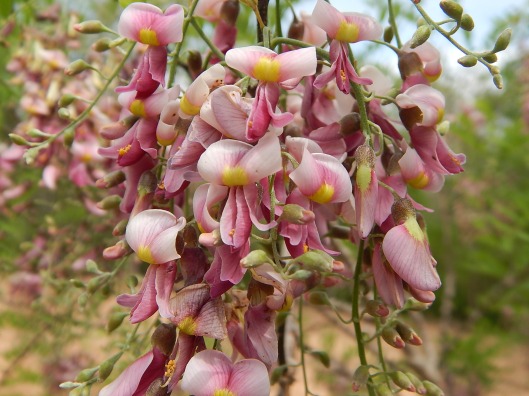
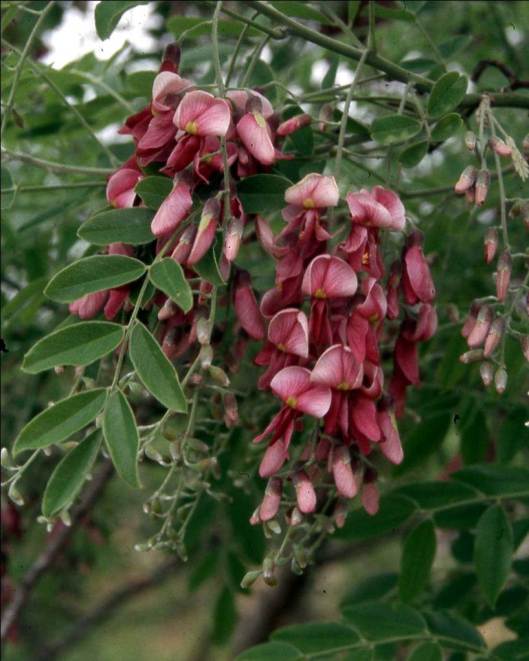
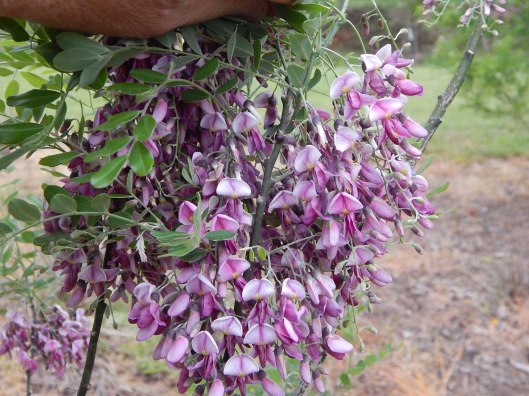
We love Eve’s Necklace for a lot of different reasons.  While the botanists have changed the name to Styphnolobium affine (Torr. & A. Gray) Walp., I have such a hard time pronouncing the new name, so I’m still stuck on Sophora affinis.  Eve’s Necklace is a sweet little tree that calls home the limestone soils from central Texas through north central Texas and then west to Edward’s plateau.  The tree is reported to reach 35′ but most are half that.  Rose to pinkish flowers are produced in early spring Wisteria-like clusters which are followed by black fruit pods that resemble a string of beads, thus the common name.  The tree in seed is quite showy.  Like its cousin, the Texas mountain laurel, the seeds are poisonous.  Rule: Don’t graze in the landscape.  In our region for best flowering the tree needs full sun and for for best survival in our region the tree needs superior drainage.  Planting on a slight berm is helpful.   The tree is remarkably alkaline and drought tolerant.  If you can’t grow Eve’s necklace, you need to change hobbies.

dscn4868

A really nice pink form at SFA Gardens

I have gone to recommending Eve’s necklace instead of crape myrtle in those regions afflicted crape myrtle bark scale, a new and devastating insect pest.  Eve’s Necklace is easy to train as a single trunk or multi-leader and prunes up nicely to a little round headed small flowering tree.  Great little tree for that special spot in front of Burger King.

One of my long term goals has been a showier Eve’s Necklace.  Most flowers are kind of a washy pink.  However, if you look close in central Texas, in the wild and in landscapes, there’s great variety from burgundy to almost white.  Paul Cox, past Director of the San Antonio Botanical Garden, found an especially dark flower form and named it ‘Amy’.  We planted out about 50 of the seedlings from that tree and have some candidates for introduction, albeit none quite as dark as the parent.

sophora-affinish-cox

Paul Cox near the San Antonio Zoo, Mar 2013, on the hunt for the dark Eve’s Necklace

sophora-affinis-amy

Sophora affinis ‘Amy’, a Paul Cox find in San Antonio near the Zoo

At SFA, the seedling plots are located under the high voltage lines at along the coliseum parking lot and we interspersed Callicarpa American ‘Welch’s Pink’ seedlings in between.  It’s a brilliant idea.  Waste land and an opportunity to find a pinker beautyberry and a rosier Eve’s necklace.  They’ve been in flower for a few years and we’re pulling seed from the best colored forms.

dscn4947

Seedlings of ‘Amy’

sophora-affinis-1

One of our selections

dscn4944

We’re a long way from being at Home Depot

Eve’s necklace is a great small tree for the deep South.  We’ve given the seed a short soak in sulfuric acid and gotten high germination and have also found the seed to come up on its own quite reliably.  In fact, in our landscape we see seedlings popping up here and there but it’s not a big nuisance.   In areas with heavier rains and soil drainage issues, plant on a berm in well drained soil.  This is a tree that loves full sun and once well established it’s there to stay.  It’s trouble free, east to train, showy in bloom and showy in seed pods.  Yes, the seed is poisonous and neighbors, kids and animals should be warned not to graze in the landscape.  In Texas, we just consider that a given.

Sophora secundiflora – I’ll Have Hot Sauce With My Frijolitos, Please

04 Wednesday Jan 2017

Posted by creechdavid in Uncategorized

≈ Leave a comment

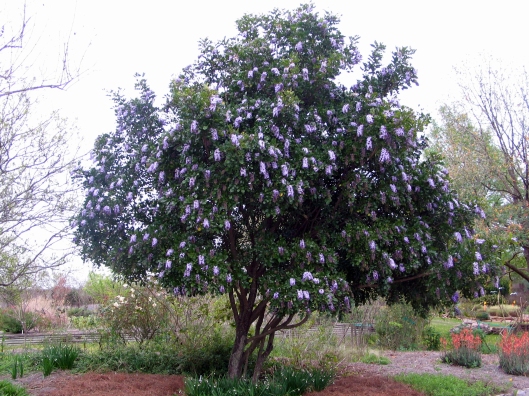
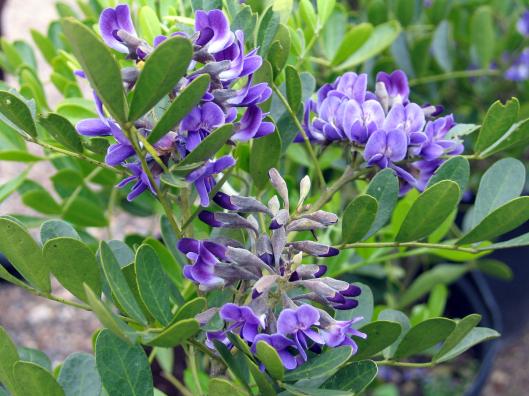
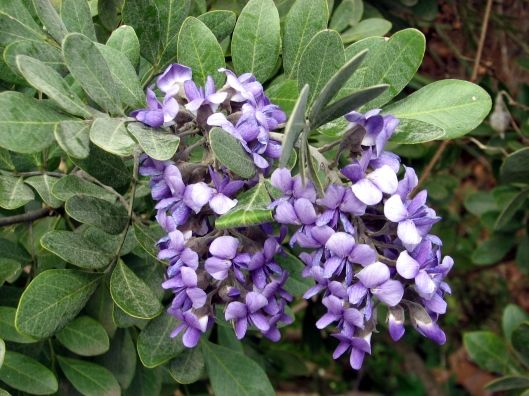
Sophora secundiflora is simply a really great plant for gardeners in the Pineywoods of Texas.  Whether called Texas mountain laurel, mescal bean, or frijolito, it’s actually quite common in western regions of the state.  It’s a staple of the hill country but rarely encountered in the Pineywoods.  I’m not sure why.  After all, it’s tough as nails, drought resistant, fully evergreen, breath taking in bloom and enjoys a fragrance to match.  Reported to reach thirty feet in the wilds of Texas, New Mexico and northern Mexico, most landscape specimens come in at half that.  If there’s a negative, it’s that the species is a bit of a slow grower.  We’re a fast food – fast plants society and waiting a decade or two for a plant to obtain stature and class rarely fits the bill.  There’s another minor negative characteristic I should mention.  The seed are reported to be highly toxic with as few as four masticated seed enough to have you pushing up daisies.  However, keep in mind if you swallow the seed they generally pass on through.  Best not to chew them.  Generally considered a Zone 8 to 9 plant, hardy forms are reported but remain unexploited.  Plants in Dallas and parts north have rarely appeared healthy to me but there are exceptions.

sophora-secundiflora-treesearch-1-1

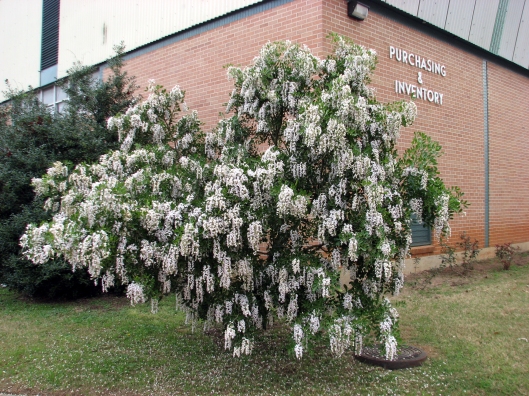
Texas mountain laurel at TreeSearch Farms, Houston, Texas

sophora-secundiflora-treesearch-2

Texas mountain laurel, smooth leaves, grape-Kool-Aid fragrant flowers

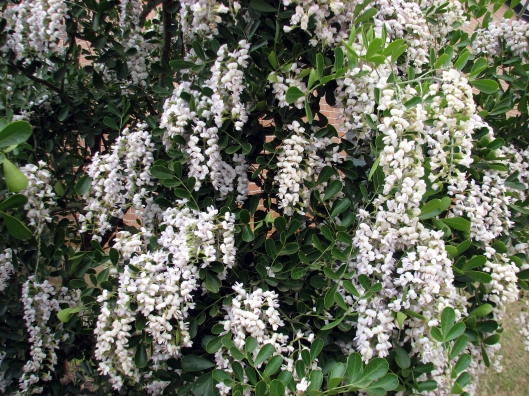
Texas mountain laurel is a member of the Fabaceae and most of the 50+ species enjoy showy pea-like flowers in terminal racemes or panicles. To complicate things I must admit that botanists have renamed the species Dermatophyllum secundiflorum. This rather cosmopolitan genus features both deciduous and evergreen species.  While most Texas mountain laurels sport blue and lavender flowers, there are white flowering forms and I’ve heard of but not seen a genotype in Austin that features light pink blooms.  There is also a rarely encountered in Mexico botanical variety, Sophora secundiflora var. pulverlenta, that has pubescent gray leaves.  We have this form in the Mast Arboretum and it’s an even slower grower than the straight species.

sophorasecundifloravarpulvurlenta03-10-09

Sophora secundiflora var. pulverlenta is the fuzzy leaf form

To grow Texas mountain laurel in eastern climes it’s important to provide superior drainage. Limestone additions to the soil are also recommended.  A berm or raised bed is perfect.  We have one white-flowered form that rests on the corner of College Avenue and Wilson Drive.  It’s had a hard life but makes a dramatic show every year.  So, how to multiply this?  Well, grafting works but it’s not really much of an option because the plant often sends up shoots close to the base of the plant.  There’s another way.  We have seedlings of the white flowering form and once they bloom, are rogued to get rid of the blues, and the process repeated for five or six generations, we should be able to stabilize the white form from seed. Because we have so few Texas mountain laurels in our city, there shouldn’t be any worries about pollen pollution.   I’ve put some math to this and my calculations indicate that I’ll be about 100 years old when we reach the fifth or sixth generation.  For some reason, that really doesn’t appear to one of my best plans.

sophora-secundiflorawhite03-09-09

White flowered form at SFA Gardens, corner of Wilson and College Ave

sophora-secundiflorawhite

White flowered form at SFA Gardens

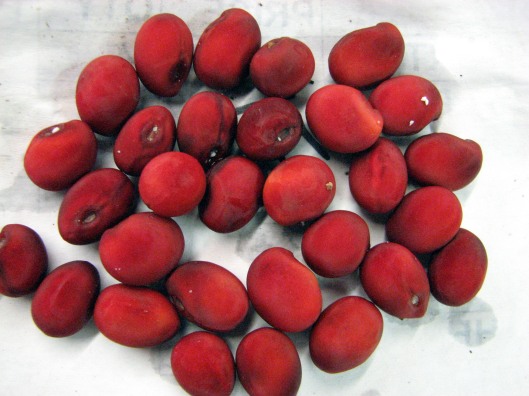
With a name like mescal bean, you might think something is awry here.  Is this a drug.  The answer is yes but there’s some nomenclature issues here.  Having had some experience in Mexico, a short explanation is in order.   Mescal is a distilled beverage made from Maguey agave. Mescaline is a psychedelic alkaloid occurring in peyote cactus which has been enjoyed for millennia by our southern neighbors and in very tight knit clans in our own country.  Mescalbean beans are different and do not have either mescal or mescaline, but they are packed with a poisonous alkaloid cytosine, which is chemically similar to nicotine. Mescalbean beans are reported to have been used by some native American tribes as a way to make a kind of hallucinogenic contact with the other worlds.   I understand that there’s a really fine line between getting high and getting dead.  I had a friend who told me he once enjoyed a Mexico mountain experience with villagers.  I asked him how did it go?  He said, “Well, personally, I found the hallucinations rather mild.”   My conclusion was it might be best to stay with Miller Lite.

sophora-secundiflora-seed

Sophora secundiflora seed

sophora-secundiflora-2

Handling sulfuric acid requires caution

Seed propagation is easy but involves a 45 minute to one hour soak in sulfuric acid to scarify the seed.  In the deep South, it’s a great scarification lab exercise as long as the safety lesson is well explained.  Spilling sulfuric acid on you or your clothes is a sad picture. To avoid all that, a hobby gardener can simply use a file to cut through the tough seed coat.  We have rooted the species but it’s reported to be very difficult and percentages are low.  Years ago, Nathan Unclebach, a student of mine, took on the impossible task of rooting the white form and he did get about a half dozen to root and grow.  I concluded it could be done but told him it was best to hang on to his day job.

Taxodium distichum – The Senator Says Goodbye

04 Wednesday Jan 2017

Posted by creechdavid in Uncategorized

≈ 2 Comments

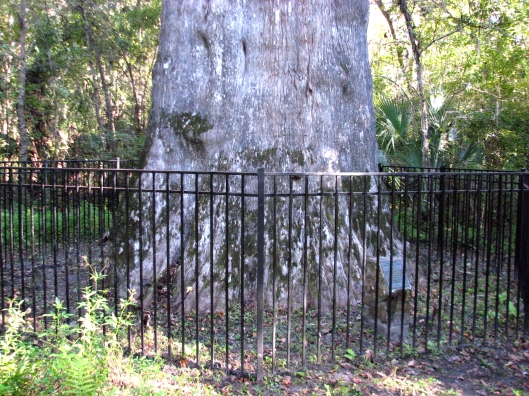
The National Champion Bald Cypress was killed January 16, 2012 in Longwood, Florida. Murder is the operative word.   The “Senator” was burned to the ground by a young lady who went into Big Tree Park to smoke meth, lit a small fire and caught the 3500 year old tree on fire.  As a plant person, this was very sad news.  As a devotee of the big tree world, this was a catastrophe.  I had been to the park three times in my life to reach across and touch the patriarch.  It had been reported as the world’s fifth oldest tree.  However, I’m not so sure that was true.  A disaster for sure.  Think of all the memories.  This beacon in the forest had been used as a landmark for the Indians, the Spanish, and finally, for the rest of us.  Dr. Gary Knox at the University of Florida emailed me the bad news and forwarded a link to the incident which included a short video of some very upset citizens – and the Senator saying goodbye in flames.

taxodium-senator-4-copy

2008 image

It wasn’t long before what happened was known and the young lady responsible for the “accident” was arrested and quickly became national news.   An aspiring model, she never knew that her foray into smoking meth would lead to such fame and derision.  Evidently she took pictures of the fire, downloaded the images and showed friends, saying, “I can’t believe I burned down a tree older then Jesus.”  Some might conclude this not the brightest way to hide a crime.  With the laws on the books as they were, she was given five years probation and allowed to walk.

http://www.dailymail.co.uk/news/article-2652104/Model-burned-3-500-year-old-tree-called-The-Senator-high-meth-avoids-jail-time.html

Six months later she was arrested for DWI and given jail time.  On a long ago webpage, I posted her picture and her name and righteously called for the death penalty.  But time has passed and I’ve mellowed.  I hope she’s well, I really do.  I think, perhaps, she’s  volunteering every now and then to plant trees in a park.  You can still google “Senator burned” or anything about the Senator – and boom, there are hundreds of links that appear with her name, her image, and her sad plight in the world.  Punished for life.  There are a lot of ways to get fame and fortune in the world.  Burning down the Senator is not one of them.

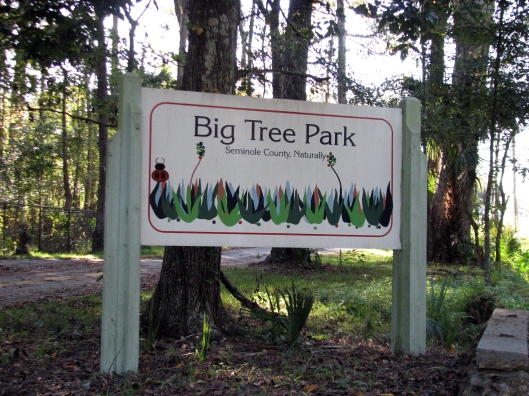
The Senator was the big guy in the Big Tree Park in Longwood – just east of Orlando, Florida.  This was one amazing tree.  I find this such a sad ending for a tree that’s been through 3500 years of enormous challenges – and survived.   This tree has been through hell.  It’s stayed alive through floods, droughts, fires, hurricanes, and the worst threat of all – in recent centuries – a forest full of loggers and dreaded land use managers.

taxodium-senator-1-copy

Big Tree Park is near Lockwood, Florida

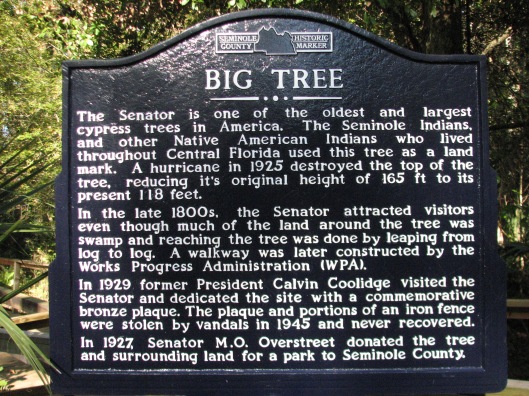
Below is the plaque at the site that interpreted the tree. It was 165’ tall.  However, the top blew out in 1925 and the tree was reduced to 118 feet tall until this fire. It was 17.5 feet in diameter.   In 1929, President Coolidge dedicated the site with a plaque but the plaque and a wrought iron fence were stolen by vandals in 1945. People have been up to mischief here for a long time.

taxodium-senator-2-copy

Sign for a tree that no long exists

taxodium-senator-3-copy

The Senator was evidently quite hollow and the trunk served as a raging chimney for the fire. I know it’s quite passé, but to me that smoke pouring from the tree is the connection from the past to the present to the future. There it is, wafting into the heavens, mixing elements, energy and enthusiasm once again with the smoke of those long ago Indian camp fires. It’s just the way things are. There’s not much we can do about it now, except, perhaps, we should just keep on planting.

There is a small silver lining to this story, however.  185 miles to the South, a nurseryman had previously snitched some cuttings and grafted trees of this old clone, which led to new trees of that very clone, which led to a celebratory planting day that is recounted here:

http://www.wpmobserver.com/news/2013/mar/06/resurrecting-senator/

The end result is a new tree is in place, a clone of the original tree, carrying thirty five hundred years of history into the future.  That special tree has been given the name, The Phoenix, so darn appropriate for a tree that refuses to die, determined to to rise from the ashes of destruction.

Taxodium X ‘LaNana’ – Born in America and Mexico, Improved in China

03 Tuesday Jan 2017

Posted by creechdavid in Uncategorized

≈ 9 Comments

This is a modern plant.  Taxodium X ‘LaNana’ has been tested far and wide in the USA under the selection number T406.  It’s a good one.  With genetics flowing from Taxodiums in Mexico and the USA, bred and selected in China, and now back home in the USA, there’s much to think about.
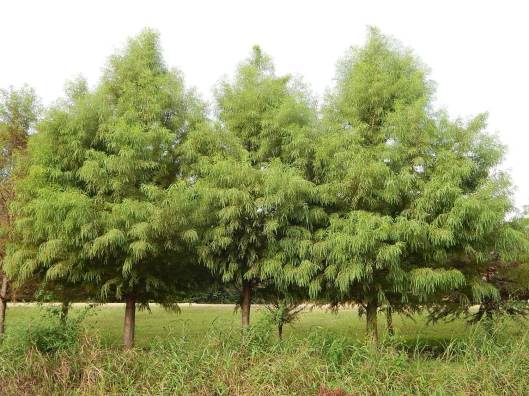
taxodium-lanana-t406

Taxodium ‘LaNana’ (AKA T406) along the banks of LaNana Creek.

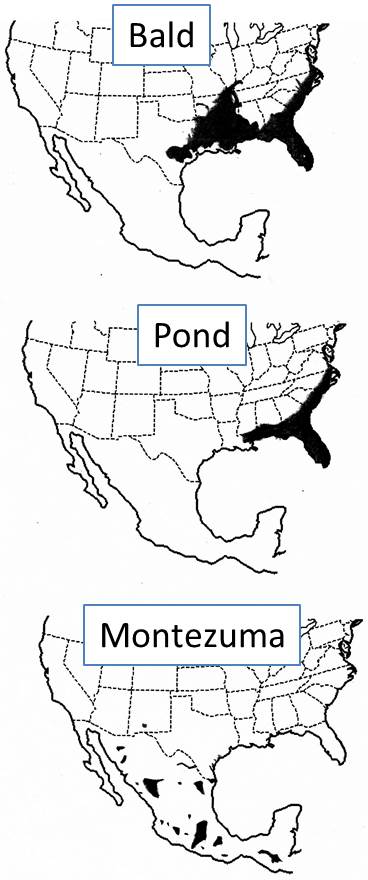
I can remember standing in the Nanjing Botanical Garden with my friend and colleague Professor Yin Yunlong in 2001 and he was providing me with my first exposure to the controlled crosses of Bald and Montezuma cypress in the Nanjing Botanical Garden.  It had the name Z302 with the Z standing for Zhongshanshan, which memorializes the tree for the Father of Chin Sung Yat-Sen born in 1866.  There are now many Taxodium hybrids in China and they are all the result of a Taxodium Improvement Program at Nanjing Botanical Garden, Nanjing, China.  While baldcypress are North American, the Chinese have exploited this genus since the early 1900s.   As part of a Taxodium improvement program, NBG scientists have produces several lines of Taxodium hybrids.  The superior clones have been multiplied by cutting propagation and are planted in the millions in SE China, mostly as roadside forests, but also in wetland restoration projects, as windbreak forests along the inland side of coastal dikes, and as part of canal and river streamside management zones.  The clones are primarily the result of controlled crosses of two Taxodium genotypes:  Bald cypress (Taxodium distichum var. distichum) (BC) and Montezuma cypress of Mexico and the tip of Texas (Taxodium distichum var. mexicanum) (MC).  Pond cypress (Taxodium distichum var. imbricarium) has been utilized in crosses but few selections made (T102 is the exception).  The ranges of bald, pond and Montezuma cypress is illustrated in Figure 1.
taxodium-map

Fig. 1.  Range map of the three Taxodium genotypes

A LITTLE HISTORY:  In China in 1988, clones Z302 – (a BC X MC F1 hybrid), Z401 (PC X MC), and Z202 (PC X BC) were selected in China primarily for growth rate and tolerance to alkaline and salt-rich coastal floodplains. I came to learn that Z stands for Zhongshanshan, a name that memorializes Sun Yat-Sen, the Father of China, and the word tree.  For reasons I can’t remember, I changed that to Z to a T, for the word “tree”, I guess.  T302 is recommended in China for soils with  pH 8.0~8.5 and salt concentrations <.2%.  Other attributes of T302 included 159% faster growth than BC, good columnar form, longer foliage retention in fall and early winter, and no knees.  T302 has been in the USA since January 2002 and is currently under evaluation in over 30 locations in southern USA.  The clone was named ‘Nanjing Beauty’ in 2004 as a cooperative introduction of the SFA Mast Arboretum and Nanjing Botanical Garden.  After many years, the clone can be found in many gardens but the authors conclusion is that this introduction carries a fatal flaw.  If not pruned during its early life, the tree is multi-leader and limbs are prone to narrow crotch angles and can break out in winds.  In China, trees are cut back dramatically to the leader which forces many branches and a columnar form is created.  Properly pruned in its youth, it’s a fine tree.  It’s taken me years to figure this out.  Professor Yin has reminded me many times that parents train their children, so it is with this tree.  He also said that good children come from good parents.  Some might argue that.

In March 2005, the SFA Mast Arboretum received two new clones from China. T140 and T27 are considered more evergreen than T302 and both demonstrate strong salt tolerance.  The clones were selected from a field population of T302 X TM – with strong TM characteristics and improvements in growth rate, salt tolerance, form and vigor.  T140 grows faster than T27, which produces a wider profile.  The foundation of the most recent selections comes originally from crosses made by Professor Chen and Liu in 1992 at the Nanjing Botanical Garden.  Pollen from TM was applied to a female T302 and fifteen selections were made in 1995.  The main characteristics for selection were 1) fast growth rate, 2) dark green color during the growing season and a red-orange leaf color in the autumn and 3) evergreen leaves.  In 2006 or 2007, the results from T140 and T27 will be reported and registered with the Chinese Forestry Department. In June, 2005 there were less than 100 each of these two clones.  T118, T120 and T149 have already been registered with the Chinese Forestry Department at the provincial level, while T302 has been registered at the national level.

Finally, the latest clones (T405, T406, T407, and T502) entered commerce in China with fanfare and promotion.  These four clones are considered elite selections from large populations of seedlings developed from controlled crosses.  The trees have been planted extensively at SFA Gardens and T406 was introduced as ‘LaNana’, named after the creek here at SFA Gardens that it calls home.  It was released primarily because it has been the most foliage blight resistant.  Cercosporidea is a fungal disease that can disfigure needles in early Fall and cause premature drop.  T406 keeps its foliage well into winter.  The malady is prone to Montezuma cypress in Eastern Texas and across the Gulf South.  Further west, it’s not a problem.

There’s great diversity in form, adaptation to soils/drought/alkalinity/salt that has been exploited to produce clones targeting specifi land use needs. Both genotypes are considered Texas natives.  The clones are simply improvements via hybridization of superior performing trees of both genotypes.   From large numbers of seedlings, my NBG counterparts have selected and introduced over a dozen clones.  They are fast growing, alkaline and drought tolerant, do not produce knees, and have good tree form.

A synopsis of this arena of study can be found here in Arnolida:

Click to access 2011-69-2-can-taxodium-be-improved.pdf

Key Attributes of the Taxodium Hybrids.

  1. The clones are easily rooted. We are achieving 50 -90% rooting in 10-12 weeks if stock plants are vigorous and healthy. Percent rooting in various studies has ranged from 50% to 90% depending on the clone, the health of the cutting wood, and our mist management at the SFA Gardens propagation house.
  2. The clones are alkaline tolerant and salt tolerant. These are the two characteristics required of sites in SE China, particularly for conditions with coastal windbreak forest – basically hundreds of miles of windbreak plantings on the inland side of concrete dikes that keep typhoons at bay fjrom the huge populations in Shanghai, Ningbo, Suzhou and along the coast in that region.
  3. The clones naturally have good form which can be improved with pruning in the early years.
  4. Fast growing – under the best Horticulture the clones can frow 4 to 6′ per year.
  5. Drought tolerant – 2010 and 2011 proved that
  6. No knees
  7. Longer foliage retention into the early winter when needle blight is not a problem

Pruning makes a difference.  In one study at SFA, we studied three clones for three years.  One group of trees was pruned all the way back to the leader every winter.  Another group was pruned by heading back branches to create a columnar Christmas tree form.  The last group was not pruned at all.  The results indicated that modest pruning each year resulted in fine form and did not affect tree height or trunk diameter.

taxodium-pruning

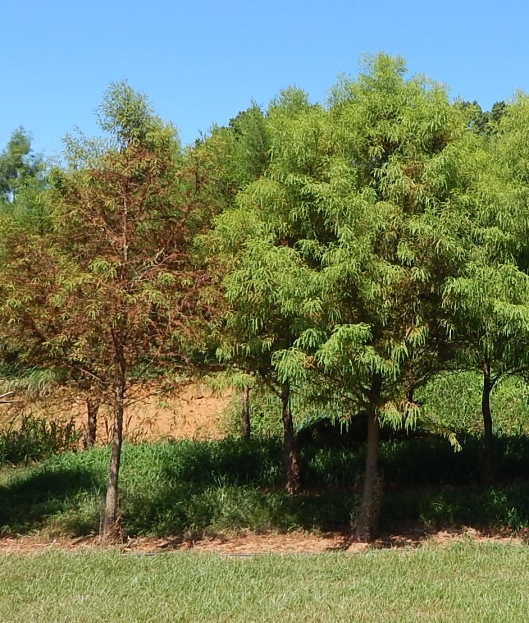
In scattering the clones north, east, west and south, we’ve learned a lot.  T406 now ‘LaNana’ remains a favorite.  While some of the clones tested get heavily impacted by Cercosporidea, ‘LaNana” is usually blessed with clean emerald green foliage and is blemish free most years in Nacogdoches
t406t406

‘LaNana’ showing good resistance to leaf blight at SFA Gardens
 

t406-07-24-2015

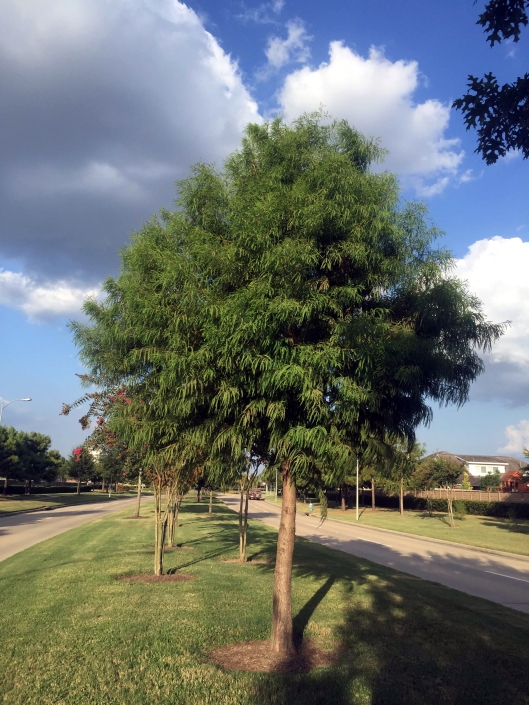
A trunk pruned ‘LaNana’ (AKA T406) is very clean at Cypress, Texas (Laurence Truett image)
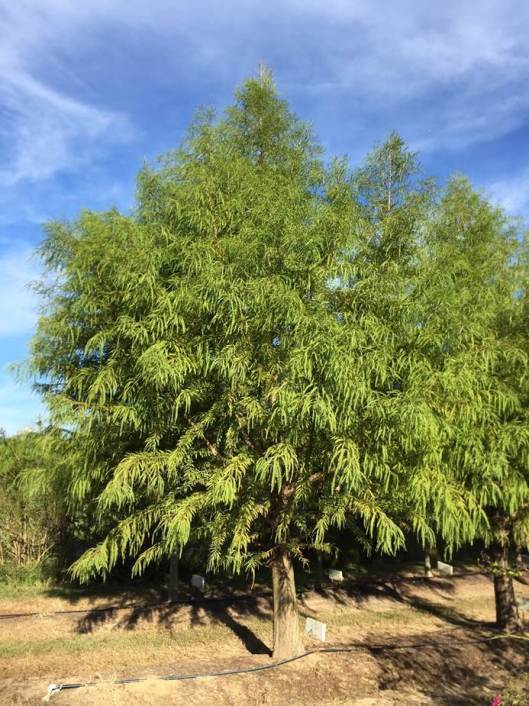
 

t406-ark

Unpruned ‘LaNana’ at the University of Arkansas, image by Jim Robbins

Propagation:  Almost all our trees have been produced by cutting propagation.  Cut back trees produce strong shoots that root easy.  We’ve found that June cuttings treated with 2500 to 5000 PPM K-IBA can root at high percentages in 12 weeks.  Moved from the mist and lightly fertilized, they can be potted into larger containers their first winter.

Conclusions:  We have produced thousands of the clones and made distributions to botanical gardens, public gardens, interested nurseries, and bald cypress enthusiasts across the South.  The general consensus is that in the right spot they are terrific trees.  With strong alkalinity and salt tolerance, they have a place near the coast line or where soils are less than stellar.  They are not to be planted in swamps that are inundated.  They love being near water but not under it..  While bald cypress can tolerate that, Montezumas and the hybrids prefer better drained conditions.  For the discriminating gardener, nurseryman, or landscaper – the China balds are a good bet.  How many trees do we plant that can be here 1000 years from now?  When you think of the genes of Mexico and USA being combined in China, with selections made, with the millions planted in China – and now they’re back home in the USA ready to deal with a new world.  It’s all about international relations.


Arnold, M. and G. Denny.  2007.  Taxonomy and Nomenclature of Baldcypress, Pondcypress, and Montezuma Cypress: One, Two, or Three Species?  HortTechnology January-March 2007   vol. 17  no. 1  125-127.  Which can be accessed here: http://horttech.ashspublications.org/content/17/1/125.abstract

 Robert Adams, Mike Arnold, Andrew King, Geoffrey Denny, David Creech.  2012.  Taxodium (Cupressaceae): One, Two or Three Species?  Evidence from DNA Sequences and Terpenoids.  Phytologia 94 (2): 159 – 168.  Which can be accessed here . . . http://www.phytologia.org/uploads/2/3/4/2/23422706/94(2)159-168adamsetal_taxoduim_dna.pdf


Ilex X ‘Cherry Bomb’ – The One That Almost Got Away

03 Tuesday Jan 2017

Posted by creechdavid in Uncategorized

≈ 1 Comment

Now here’s an interesting story about the one that nearly got away.  Nope, it’s not a big fish.  It’s a holly.   Ilex X ‘Cherry Bomb’ was a long ago gift to the SFA Arboretum from JC Raulston.  It arrived as part of a box of about 50 tiny plants in 1986 and had a label reading NA28255.  We were a tiny new garden on the South side of the Agriculture building unencumbered by staff, budgets, or operating money.  Basically, we were  quickly on our way to developing a reputation as an annoying, yet attractive nuisance at this institution of higher learning.  Plants were precious back then and when we received a gift box, it was an event of epic proportions.  I would gather students around for the unpacking, go to repotting and labeling and it was Christmas in the garden.  I called them bits of gold.  We would grow them on and plant them here and there in the garden.  Well, this particular Ilex was part of a collection of hollies that JC Raulston was trialing for the National Arboretum.  He had propagated them, scattered them far and wide as he was prone to do – and we were one of those lucky recipients.
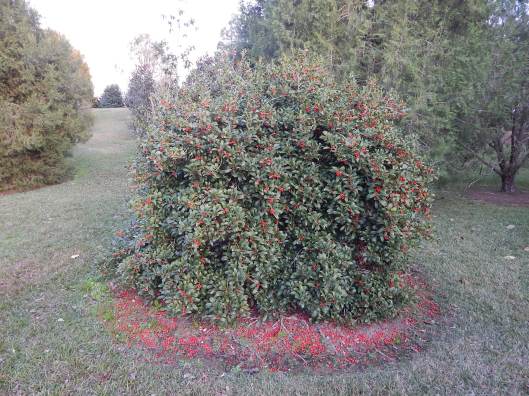
ilex-cherry-bomb-1-12-05-04

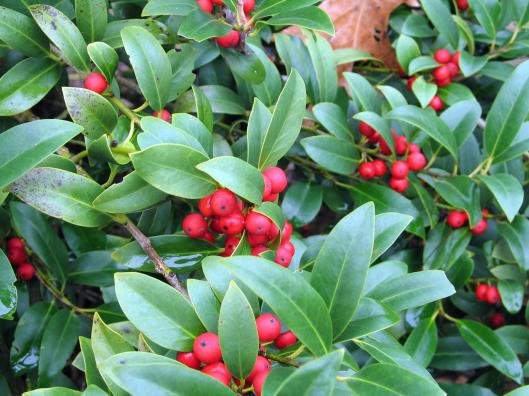
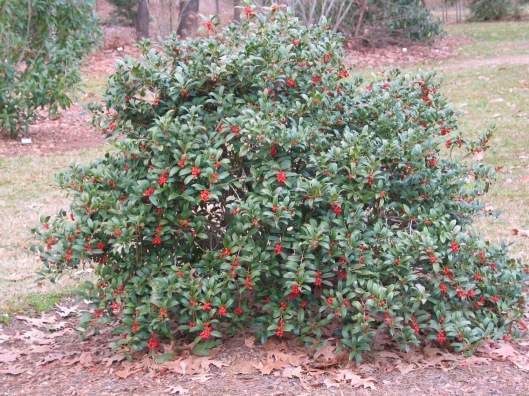
We had four NA numbered selections that ended up in 1987 in what we called “Holly Row” of Asian Valley (NA 28338, 28221, 28269, 28297, and 28255).  Most are still there.  NA 28255 was a particularly interesting clone because it was spineless and soft to the touch.  Slow growing, it eventually reached four feet tall by about that much wide and became a favorite in the garden.

ilex-cherry-bomb

Long ago image of ‘Cherry Bomb’ in the SFA Arboretum

After graduation, Scott Reeves, former student, SFASU Horticulture, found himself at Treesearch Farms, Houston, Texas working for Heidi Sheesley and he noticed that it performed well there.  It wasn’t long before numbers were built and he asked if I thought the name ‘Cherry Bomb’ was pretty good.  I thought it was a great name – and the plant entered commerce.  It received favorable reviews in the landscape trade and became a good holly to plant in the alkalinity challenged landscapes of the region in spots where other hollies often failed.  It had a good shape, clean foliage and nice big red berries that persisted well on the plant.

Time passed (decade) and the USNA decided to check with evaluators and the decision was made that none of the Ilex NA selections distributed would be introduced and they should be destroyed.  John Ruter of the University of Georgia remarked that he thought there was a “Texas garden” that had distributed the plant and he thought it was actually in commerce.  John let me know the situation and I picked up the phone and called Margaret Pooler and related my history with the plant.  No we weren’t part of the original distribution.  It was given to us by JC Raulston.  That was all the explanation she needed.  Margaret knew JC.  Everyone knew it was JC’s mantra to give it all away and let the world sort it out.  I provided some additional information and the plant was introduced formally.

As quoted from the eventual introduction by the National Arboretum, ‘Cherry Bomb’ originated from the breeding program of William F. Kosar at the U.S. National Arboretum as open pollinated seed collected from Ilex ‘Nellie R. Stevens’ during the winter of 1959-60.  The male parent is believed to be Ilex integra.  The palnt was sent for evaluation to several botanical gardens was not pursued further by the National Arboretum.  Several growers in the southern U.S., particularly Texas, recognized the value of this plant, and in the 1980s David Creech at the SFA Mast Arboretum began to call it Ilex X ‘Cherry Bomb’.  (http://www.usna.usda.gov/Newintro/cherrybomb.pdf)

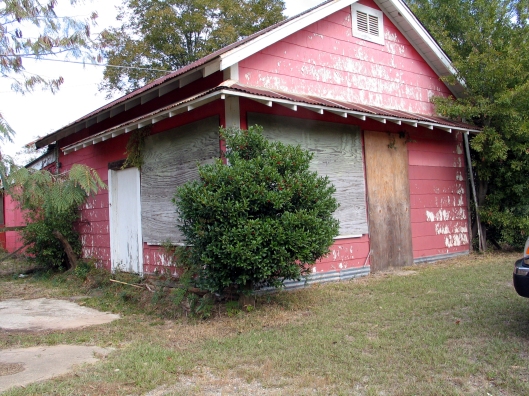
The plant is remarkably durable.  I planted one in Shelby county, Texas, at a friends small restaurant business which soon failed and the place was abandoned. While the rest of the landscape went to heaven, ‘Cherry Bomb’ remained cheerful.  With Adam Black, I recently spotted a ‘Cherry Bomb at Peckerwood Gardens, Hempstead, Texas and it was showing off in that tough spot in Texas.  We discussed its heritage and he had recently featured it in his newsletter.

ilex-cherry-bomb-center-tx-11-20-05

A ‘Cherry Bomb’ in Shelby county, Texas under zero care and culture

ilex-cherry-bomb-peckerwood

‘Cherry Bomb’ with ring of berries, Peckerwood Gardens, Hempstead, Texas 12-31-2016

The plant continues in the trade. Scott Reeves moved on to Creekside Nursery at Hempstead, Texas, and continues to sell ‘Cherry Bomb’ to this day.  Any Google search for the words Ilex Cherry Bomb will uncover a long list of nurseries growing the plant.  Tony Avent  of Plants Delight, NC, remarked, “Fortunately, a couple of Gene’s (Gene Eisenbeiss inherited the Kosar plants at the USNA) hollies managed to escape before the destruction, including a plant now known as Ilex ‘Cherry Bomb’, which is possibly one of the finest evergreen hollies on the market today.”

The plant made its way to gardens on the East coast.  Greenleaf named it a Garden Debut plant.  Other nurseries gave it a spot in their inventory.  It had made its way to Virginia and Rob Woodman’s blog raves about its performance there in lofty terms, “My hat comes off to this Holly, for the reason that it has gone out of its way to not look like a Holly except for its large red berries.   Even a taste test of sorts done with a colleague resulted with him mentioning how good that plant was for the following ten minutes.  I’m surprised he didn’t light up a cigarette after his experience to gain his composure back.  Though one would not consider it terribly sexy, ‘Cherry Bomb’ does make quiet an sensation in the garden for a Holly!”  My advice is don’t eat holly berries!  http://www.thebritishgardener.com/2012/05/damn-good-plants-holly-cherry-bomb.html

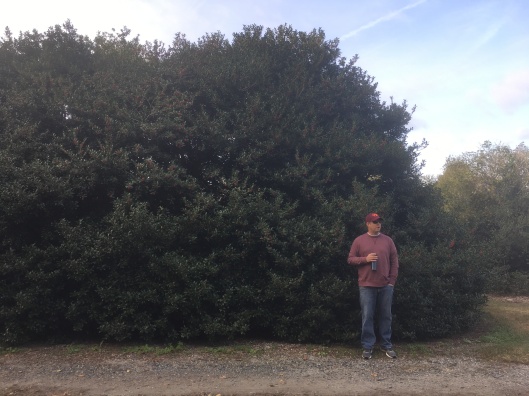
I was recently in Virginia and ran into what I think is the largest Cherry Bomb in the world.  I was visiting with Jim Owens, Research Scientist, at the Virginia Tech Agricultural Research and Extension Center, Hampton Roads, Virginia and I saw this amazing haystack and, yes, it was a ‘Cherry Bomb’.  Evidently, the station was a long ago recipient of the JCR distributed plant and ‘Cherry Bomb’ obviously found a home to its liking.  So much for the idea of it ending up as 4′ X 4′ dwarf!

ilex-cherry-bomb-va-tech

Dr. Jim Owens, Research Scientist, Virginia Tech, Hampton Roads, VA

← Older posts
Newer posts →

Subscribe

  • Entries (RSS)
  • Comments (RSS)

Archives

  • December 2025
  • July 2023
  • June 2020
  • April 2020
  • February 2019
  • October 2018
  • August 2018
  • March 2018
  • August 2017
  • July 2017
  • May 2017
  • April 2017
  • March 2017
  • February 2017
  • January 2017
  • December 2016
  • November 2016
  • October 2016
  • September 2016
  • August 2016
  • July 2016
  • May 2016
  • April 2016

Categories

  • TREES
  • Uncategorized

Meta

  • Create account
  • Log in

Blog at WordPress.com.

  • Subscribe Subscribed
    • Dave Creech
    • Join 62 other subscribers
    • Already have a WordPress.com account? Log in now.
    • Dave Creech
    • Subscribe Subscribed
    • Sign up
    • Log in
    • Report this content
    • View site in Reader
    • Manage subscriptions
    • Collapse this bar
 

Loading Comments...